By Jacob Thompson-Bell, 23 November 2026
Connecting Music and Food
I’m a musician but I work with food, so I often find myself looking for inspiration in unusual places. Across the various artistic, commercial and research-led projects I have been part of, I have learnt that music can be a powerful resource to help people connect more deeply with the food they are eating. Most recently, I had the privilege of creating and curating music connected to indigenous Kenyan foods with musicians and farmers in Bomet and Baringo counties, Kenya.
Early in 2025, I was invited to join the team for the ‘Histories and Futures of Under-utilised Crops: Reimagined’ project, which aimed to preserve histories, reimagine futures, and revive the cultural heritage of Kenya's indigenous crops. At one point in Kenyan history, these crops were a big part of people’s diets and cultural identity. However, British colonial occupation systematically marginalised these crops and associated ways of life, pushing their cultivation and consumption to the edges of popular consciousness.
The research team asked me how we could explore and reimagine indigenous Kenyan crops through music. I responded by highlighting existing research that evidences the influence of sound on the pleasure, flavour and depth of meaning we take from food (see Velasco et al. 2018 and Spence et al. 2019 for some reviews). Music is also an important way of forming, nurturing and invoking collective memories about what and how we eat within our communities. Research in diverse contexts around the world confirms this, from Indonesia to Finland and Nigeria.
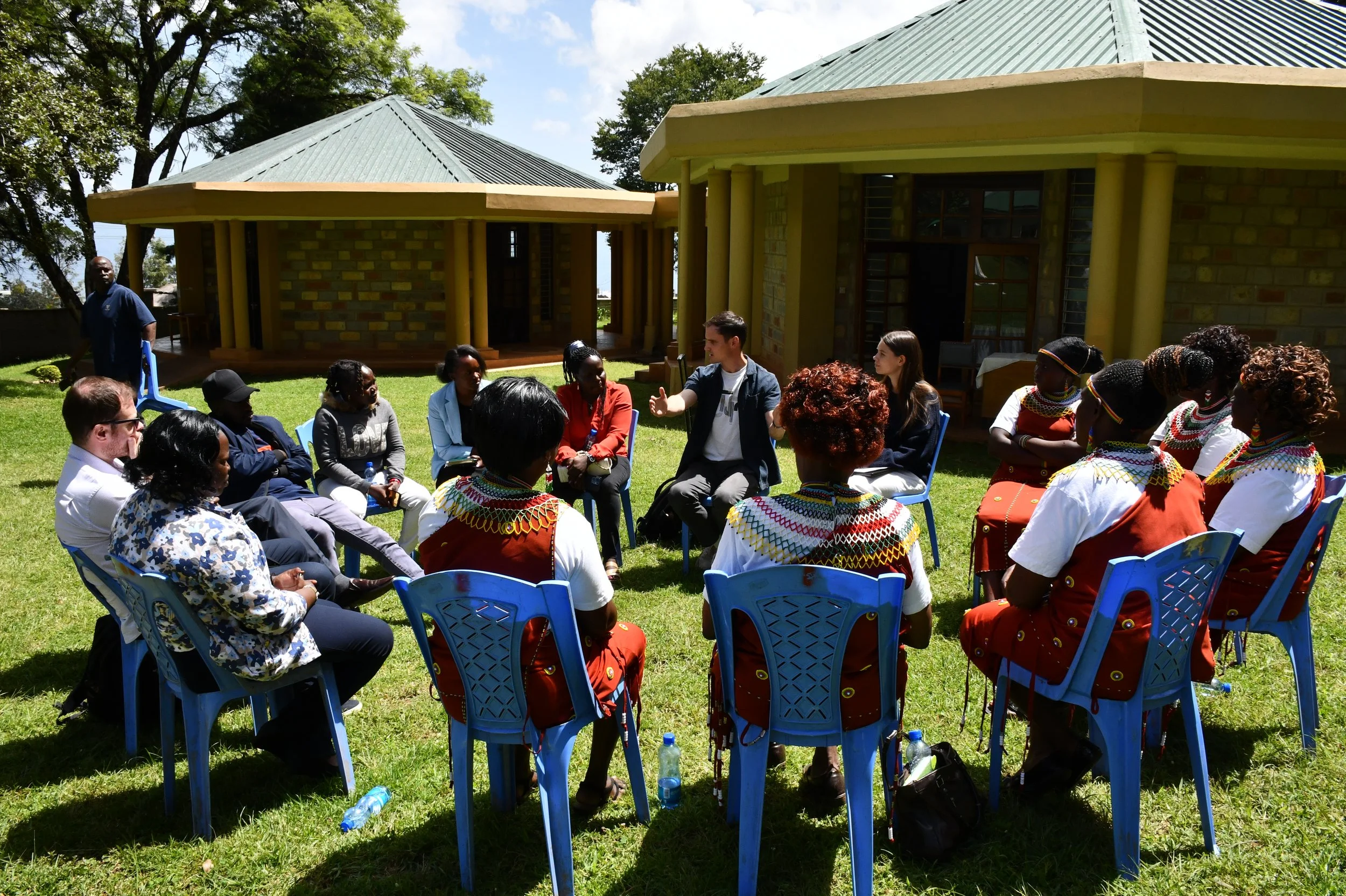
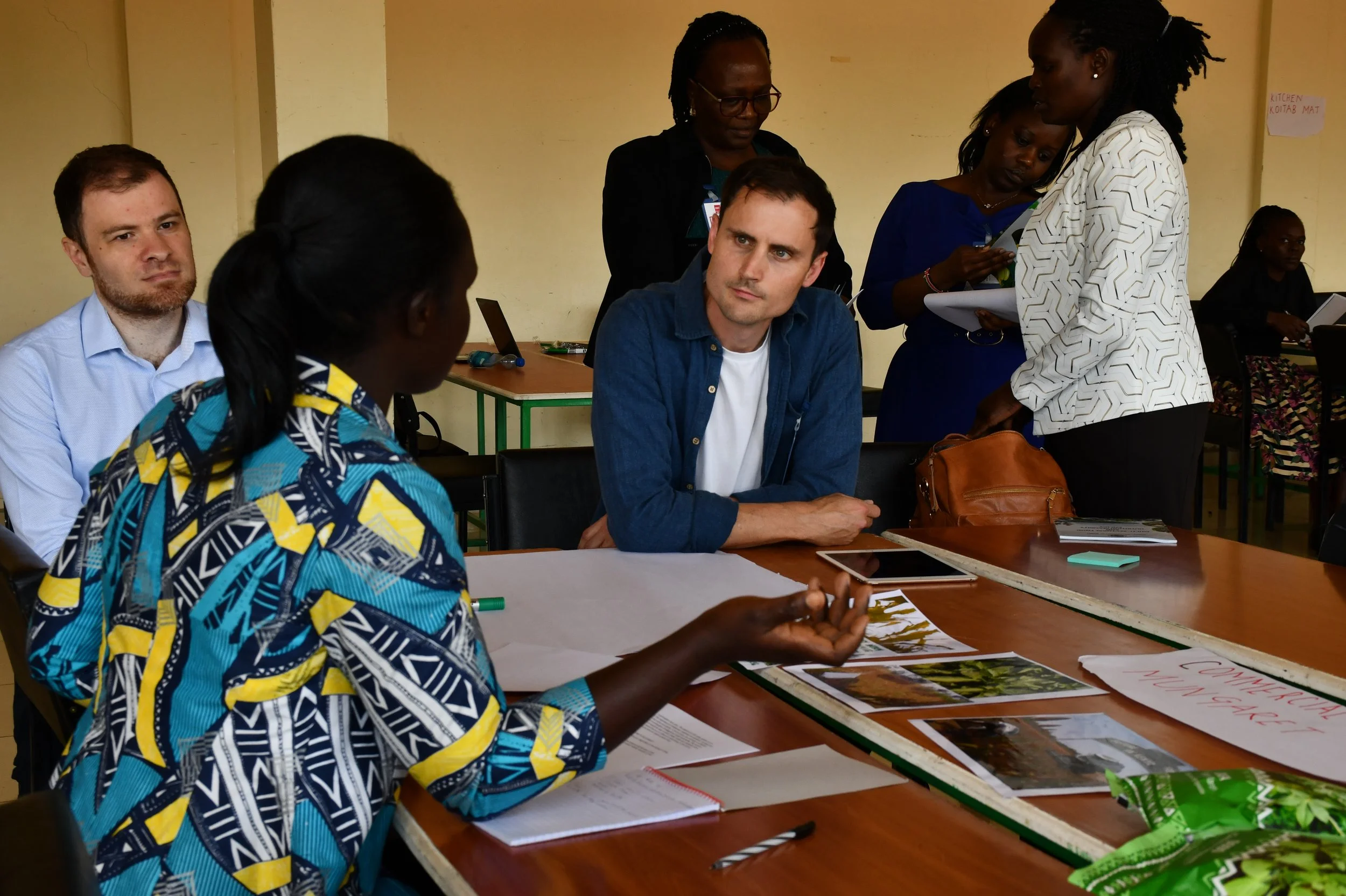
Preparation for the ‘Histories and Futures’ workshop at Kabarnet Museum, Baringo (upper) and Bomet University College (lower). Caption: Copyright © 2025 by Mugambi Kanampiu. Used by permission. All rights reserved.
Food Future Dreaming
Building on these ideas, I worked alongside the wider project team between June 2025 – January 2026 to lead a series of co-creative workshops with farming communities in Bomet and Baringo. Amongst a range of activities, including food tasting, focus group discussions and communal dining, we gathered songs and stories relating to indigenous Kenyan foods and discussed the knowledge embedded in these cultural artefacts.
From songs and stories collected during these workshops, and across some additional agricultural field recording expeditions, I produced a two-part artistic research output entitled Food Future Dreaming, which comprises an EP and sound archive (released 20 November 2026).
The six-track Food Future Dreaming EP meditates on histories and futures for Kenyan food through music, featuring collaborations with leading Kenyan musicians, including renowned gospel artist Joel Kimeto and Kalenjin heritage group Elimu Culture Promoters. Alongside the EP, the Food Future Dreaming Archive includes 47 meta-tagged recordings of songs and field recordings relating to the growing, harvesting and eating of indigenous and traditional Kenyan crops, including millets, sorghum and vine spinach.
Of relevance to the ‘Africa Climate History’ project, the Food Future Dreaming archive includes songs that reference climate, drought and the broader environmental significance of indigenous crops. For example, Teleko (Archive ID #026) is a song typically performed by women as a prayer for rain during periods of prolonged drought. The song asks God for rain and blessings for the wellbeing of the community. Millet and other traditional foods would be offered alongside. The archive also touches on matters of Kenyan life during colonial occupation, often in conjunction with discussing traditional food or farming practices. For example, Teriki (Archive ID #028) acts as a form of social critique focused on a woman who went away with male administrators during colonial times. The song complains that she has abandoned her community at a time when her fellow women are planting their crops. The song implores her to return to support their collective farming efforts.

Food Future Dreaming EP Cover Art. Cover Photograph © 2025 Mugambi Kanampiu. Cover design © 2026 Jacob Thompson-Bell. Used by permission. All rights reserved.
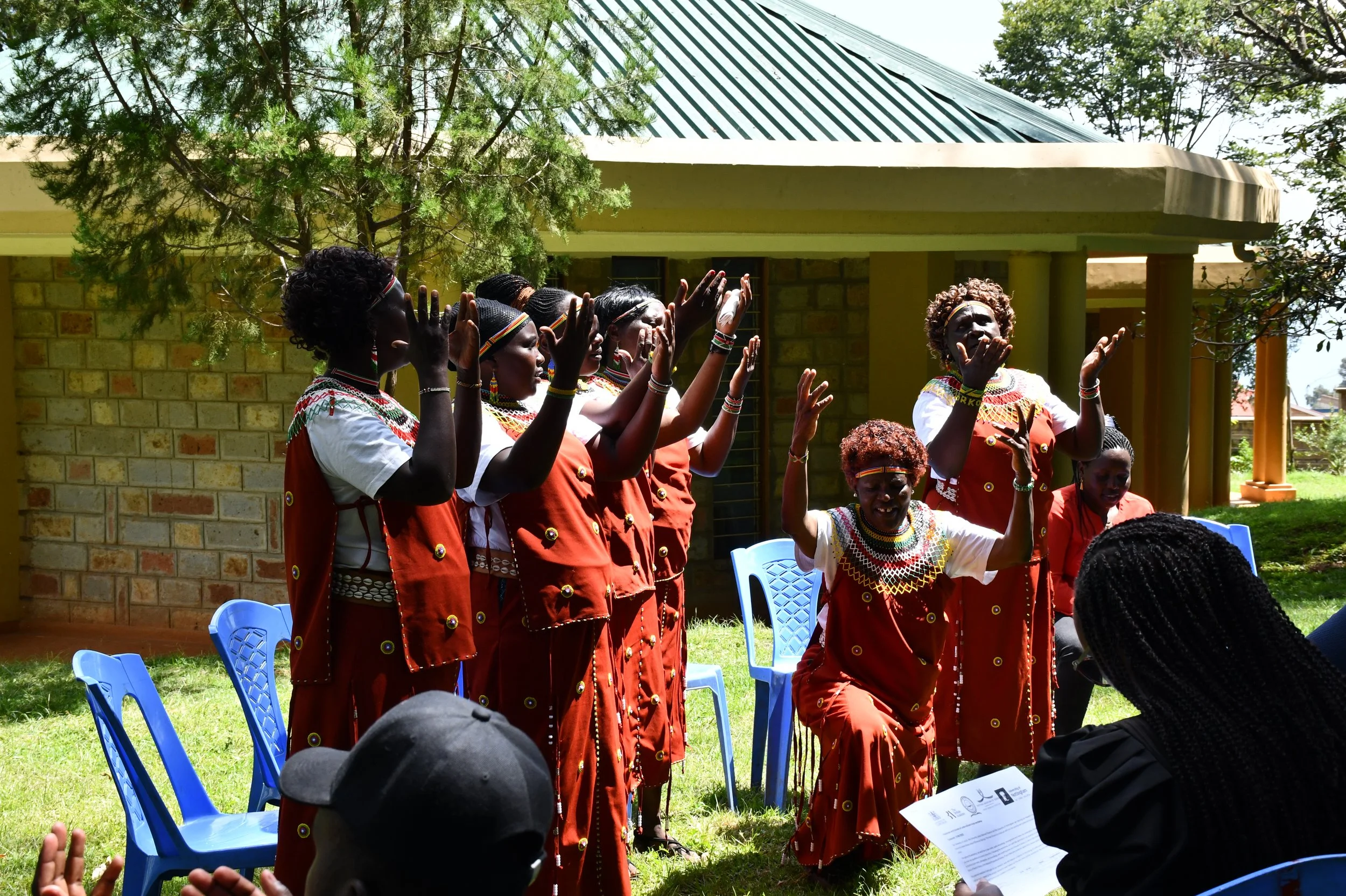
Elimu Culture Promoters perform Teleko rain song. Photograph © 2025 Mugambi Kanampiu. Used by permission. All rights reserved.
The EP also touches on the ecological context of indigenous crops. For example, the first track from the EP includes several monologues set to music, one of which, Stella Kirui’s (in Kipsigis), discusses the importance of planting trees to encourage nesting birds as a way to avoid pests. Similarly, Ongegol tugukyog (track four) focuses on the combined health and environmental benefits of cultivating and consuming indigenous crops, emphasising amongst other things their resilience and tolerance to drought conditions.
Revitalising Food Memories
Nowadays, people around the world are getting more interested in the health and environmental benefits of the foods that they eat, and Kenya is no different. As a result, there is a small yet growing resurgence of interest in Kenya about the potential health and environmental benefits of indigenous Kenyan grains like millets, compared with the more widely consumed maize. But what I learnt through working with farming communities in Bomet and Baringo is that, whilst indigenous crops can be healthy, nutritious and good for biodiversity, they are also buried deep in the cultural consciousness of Kenyan peoples.
Eating indigenous crops isn’t simply about protecting physical health, it’s about protecting cultural and community vitality. Indigenous crops can be gateways into dormant collective memories about the plants and land that ground people in their homelands. Reviving indigenous foods is therefore emotionally and culturally charged for many people, relating not only to food sustainability and security, but also to food sovereignty.
And this is where music comes in. Like food, music can be a gateway to personal and shared memories, viscerally evoking a time in our lives, a particular place or person. Music is also a way of building community and even of sharing spaces with people we do not know and so of making new connections. For the communities involved in ‘Histories and Futures’, traditional songs hold indigenous food memories. Capturing and sharing these through Food Future Dreaming is a way to revitalise and reimagine these memories for new generations, helping to share food and farming cultures that have been pushed to the margins, but which still hold cultural resonance for many people.
Acknowledgments
Food Future Dreaming is part of the wider research project ‘Histories and Futures of Under-utilised Crops Reimagined’, which ran from April 2024 to March 2026, and was funded by a British Academy ODA International Interdisciplinary Research Projects 2024 grant (Principal Investigator: Dr Lilian Korir, University of Lincoln). The project was a collaborative effort between the University of Lincoln (UK; Dr Lilian Korir, Dr Ted Fuller, Dr Nana Afranaa Kwapong, Dr Jacob Thompson-Bell), the University of Nottingham (UK; Dr Matthew Hannaford, Abbie Mathewson), Moi University (Kenya; Dr James Chelang’a, Dr Prisca Tanui, Dr Michael Chesire), and the National Museums of Kenya (Dr Esther Kioko, Dr Patrick Maundu, Veronica Ngumbau). Footage in the header on this page features Elimu Culture Promoters, Joel Kimeto, Ronald Sitonik and Frances Koech, and was filmed by Christine Kimani and Mugambi Kanampiu at National Museum of Kenya Kabarnet Museum and Bomet University of College.
Links and Further Information
Food Future Dreaming EP is available to stream on all major platforms. For more details and credits visit: https://unusualingredients.co/ffd-ep.
Food Future Dreaming Archive is available in an interactive format and to download at: https://jacobthompsonbell.com/ffd-archive.
For more information about Jacob Thompson-Bell visit: https://jacobthompsonbell.com
For more information about multisensory food-music collective Unusual ingredients visit: https://unusualingredients.co
Footage in the header on this page features Elimu Culture Promoters, Joel Kimeto, Ronald Sitonik and Frances Koech, and was filmed by Christine Kimani and Mugambi Kanampiu at National Museum of Kenya Kabarnet Museum and Bomet University of College.
