By Anjuli Webster, 13 November 2026
Some three hundred kilometers north of Gaborone lies the village of Serowe, a place South African author Bessie Head called the ‘Village of the rain wind.’ It is famous as the Bamangwato capital, and the birthplace of Seretse Khama, the first president of independent Botswana. At Plot 16188, Museum Road, you can find the Khama III Memorial Museum. Situated inside a Victorian house with a fading-red corrugated iron roof in a shady garden, the Museum’s collections include material related to the Khama family, the history of Serowe, the Bamangwato nation, and Bessie Head’s papers. In 2026, the Museum successfully repatriated 45 cultural artefacts from the Brighton & Hove Museums in England, stolen in the nineteenth century. The items would probably not have been pilfered from Serowe, however. The Bamangwato capital was not always located there.
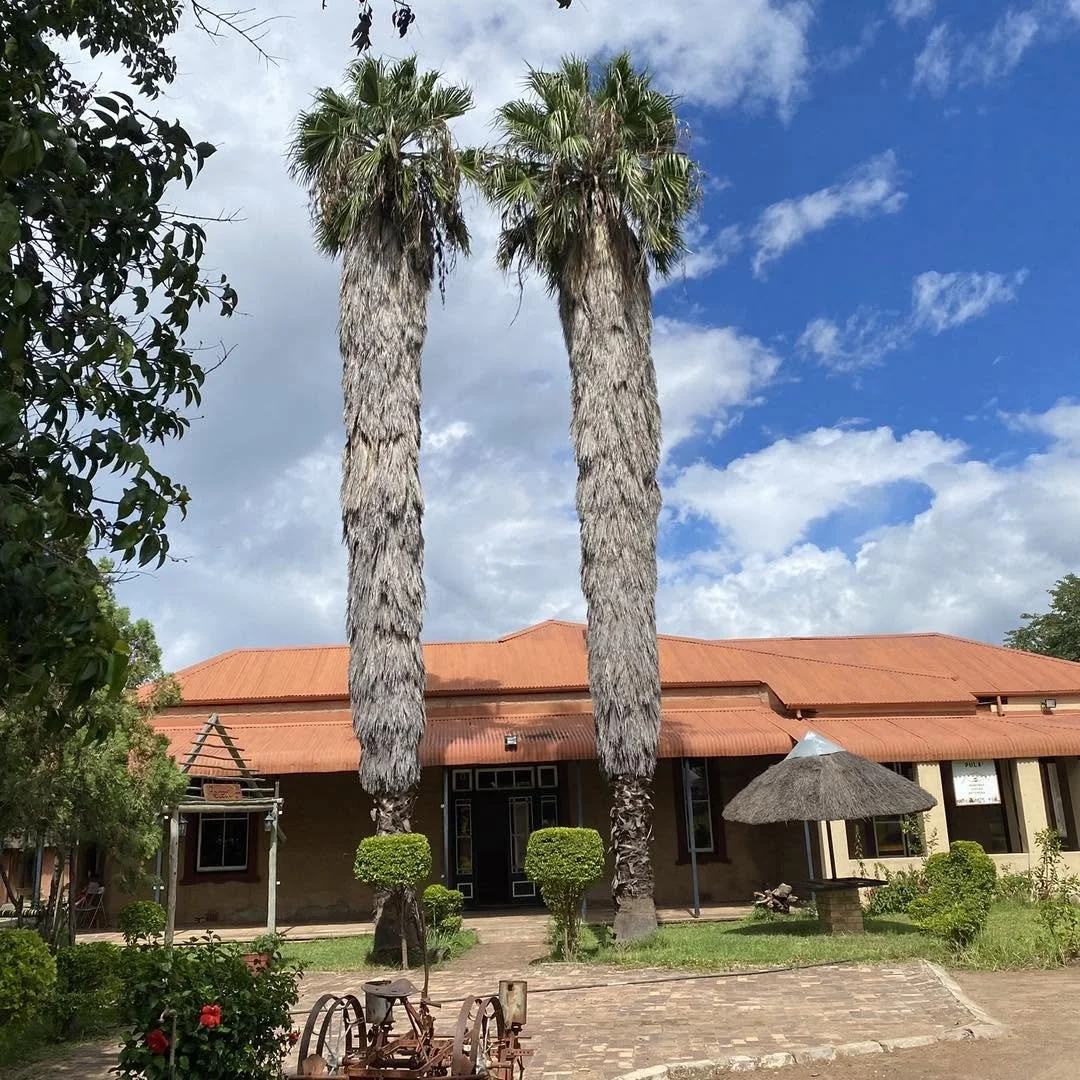
Khama III Memorial Museum, Serowe, Botswana. Source: Squishypaw, CC BY-SA 4.0, via Wikimedia Commons.
In the nineteenth century, the Bamangwato capital was situated some 100 kilometers south of Serowe, at Shoshong. Nestled at the foot of a rocky mountain range on the eastern edge of the Kalahari, Shoshong was home to some 15 000 people in 1860, and a thriving center of trade in cattle, ivory, ostrich feathers and animal skins. Kgosi (SeTswana: King) Sekgoma used the town’s location at the center of regional trade routes to capitalize on commodity exchange, gradually growing the nation’s power and prosperity.
How did such a big capital with vast herds of cattle survive and thrive in what is a very arid environment? I explore this question by surfacing the history of Indigenous environmental management at Shoshong in a new article in Oxford Intersections: Climate Adaptation, a contribution to the Section ‘Learning from the Past’ edited by Matthew Hannaford and Tinashe Takuva. When Matthew and Tinashe (who are doing incredible work on climate history and knowledge in southern and eastern Africa) asked me to contribute a chapter, I knew I wanted to return to a scene I had read about in a missionary source several years ago.
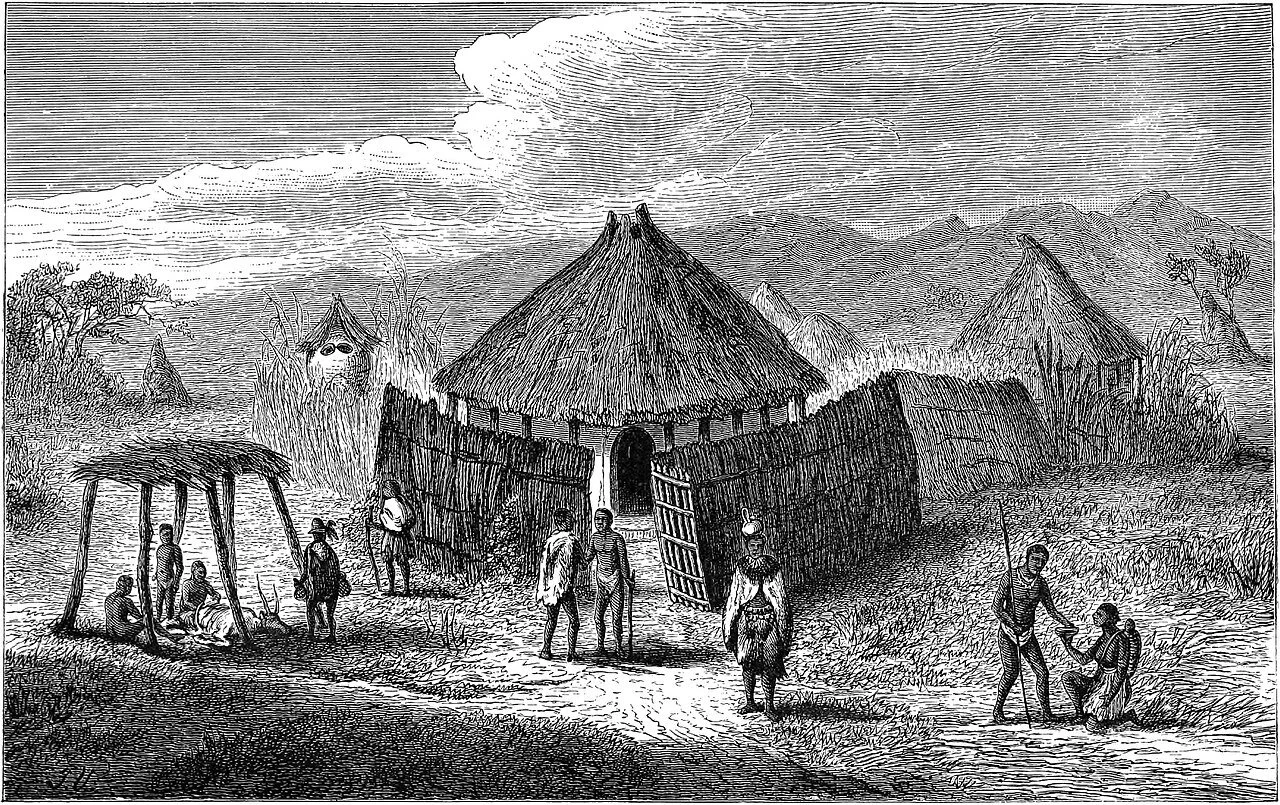
‘Bamangwato huts at Shoshong’, Emil Holub, Seven Years in South Africa, 1881, p. 372.
In the 1860s, Scottish missionary John Mackenzie of the London Missionary Society noted that herders from different cattle posts surrounding Shoshong organized watering shifts at shared fountains and wells. Despite intense demands on limited sources of fresh water in the eastern Kalahari, SeTswana-speaking communities did not enclose or privatize water. I found this remarkable. Rather, they maintained ways of understanding and engaging with the environment as an integral component of social health and well-being, not as a separate realm which could be harnessed to leverage power, or managed towards difference or profit. Using missionary sources, oral histories, and recent historical climatology scholarship by David Nash and Georgina Enfield on climate chronology in the Kalahari, and missionary discourses on drought and the climate in nineteenth century southern Africa, I explore how and why this was the case. If you are interested, you can read more about Ngwato strategies for managing aridity in the eastern Kalahari in ‘Flourishing in Drylands’.
Why does the history of environmental management at Shoshong matter? For one reason, it offers an historical example of living well together in the context of limited resources and environmental change and crisis. Julie Livingston has already looked to Botswana for alternative visions of living better together in an age of ‘self-devouring growth’. In a present shaped by economic logics of ever-expanding consumption and growth which are depleting and destroying our world, degrowth offers a vision for a future earth that is livable.
Rejecting racial capitalism’s deadly systems and building more sustainable life on earth is a daunting project. It requires direct action and organising. It is also a project which should draw on the alternative ways of organizing social and economic life available to us in the deep and kaleidoscopic past. Africa has the longest human history on earth. And, therefore, the longest history of human engagements with the environment. There are deep histories of landscape cultivation and environmental management here, supporting not only the flourishing of smaller communities and polities, but large and complex societies and kingdoms. We have much to learn from them.
