New paper: Annual and Seasonal Rainfall Variability in Mozambique During the Nineteenth Century
By David Nash, 14 September 2026
A new collaborative paper involving myself, Matthew Hannaford and Bárbara Direito has just been published in the International Journal of Climatology. The study – the first output from our joint British Academy funded project – aims to reconstruct rainfall patterns over Mozambique during the course of the 19th century. You can (and should!) read the paper yourself, but I thought it might be interesting to give some background to the archive work and methodology.
Over 70% of the population of Mozambique relies upon rain fed agriculture for food and income, making the country highly exposed to extreme weather and climate events. Recent periods of drought have been shown to lead to declining agricultural income and out-migration from rural areas, whilst heavy rain and floods may cause damage to infrastructure and increase the risk from malaria and various water borne diseases. To begin to understand patterns of rainfall variability, we ideally need long instrumental meteorological records. Rainfall data for Mozambique was only recorded systematically from the 1890s onwards. However, large collections of historical documents describing the climate and environment of Mozambique are available in various African, European and North American repositories. This is where this project comes in.
The study has been a real labour of love. Since 2023, Bárbara, Matt and I have been working across 21 libraries and archives in Mozambique, Portugal, Switzerland, the UK, and the USA, reading historical sources. Important collections included the Arquivo Histórico de Moçambique (Maputo), the Biblioteca Nacional de Portugal (Lisbon), the Swiss Mission Archive (Lausanne), Harvard and Oxford University libraries, the National Archives (London), the UK Hydrographic Office (Taunton), and the National Meteorological Library and Archive (Exeter).
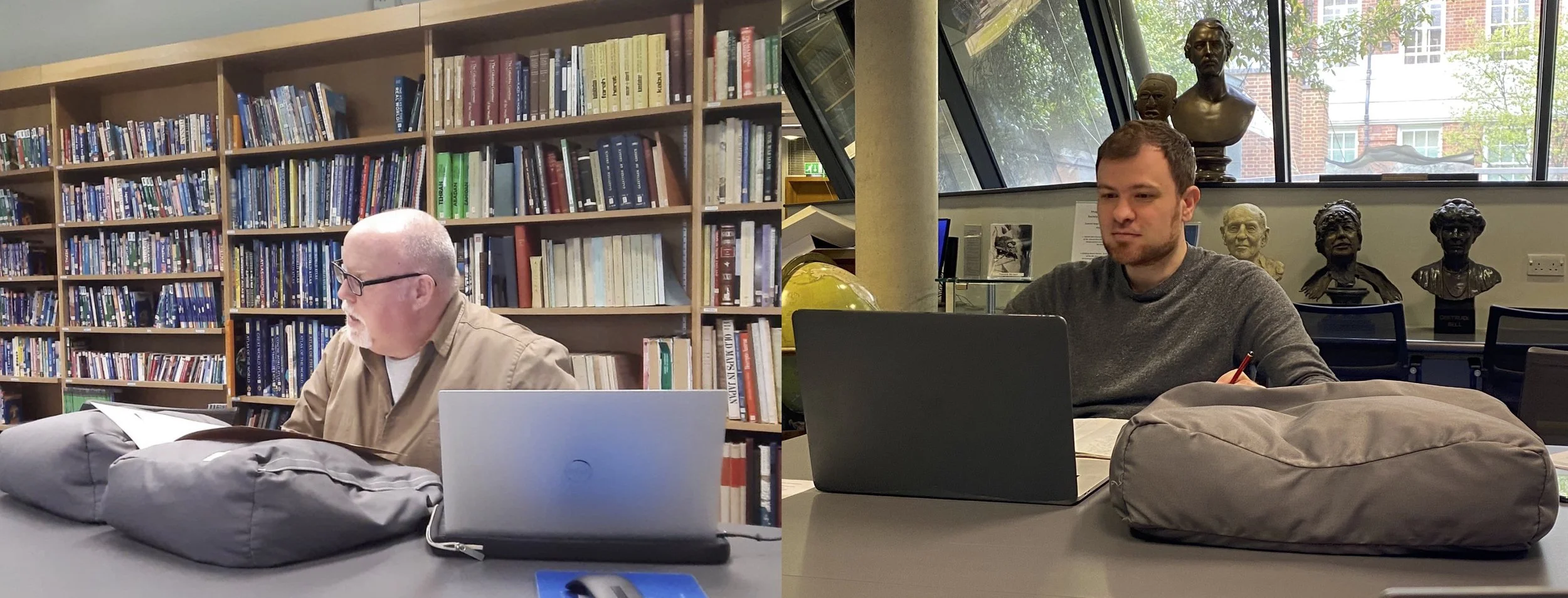
Two of the co-authors working their way through Mozambique material at the Royal Geographical Society collections.
The materials consulted ranged from letters and reports written by Portuguese colonial officials and members of David Livingstone’s Zambezi Expedition to assorted private journals and diaries (including some weather diaries) and various ships’ logbooks. Probably the most important single source was the Boletim Oficial de Mocambique, the Portuguese colonial government gazette, which was first published in 1854 and from 1877 provided monthly and then weekly summaries of food availability and agricultural activities. We also analysed a considerable volume of material online, including monographs and articles written by early explorers, various newspapers, and ships’ logbooks.
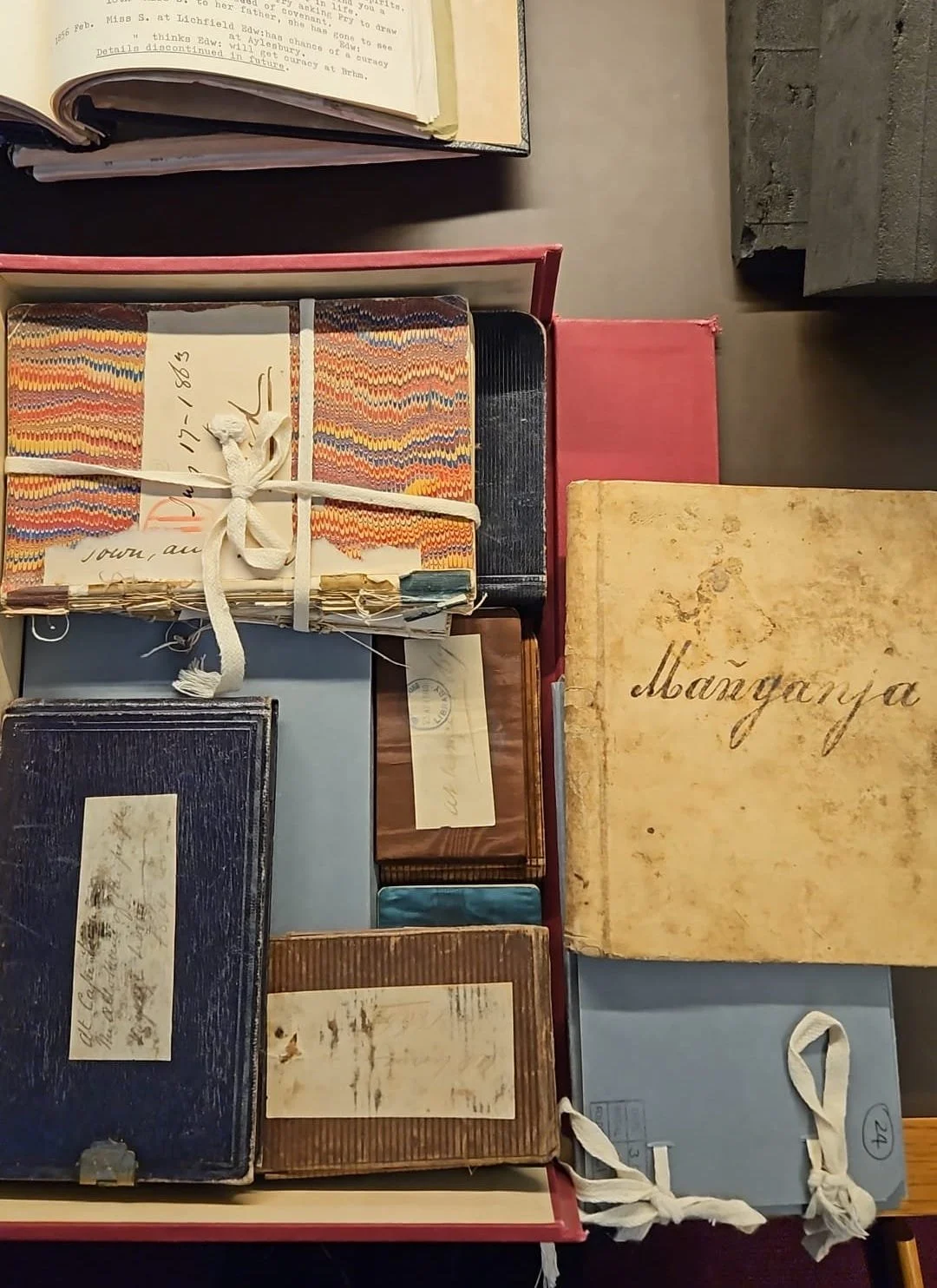
A box of Horace Waller’s diaries awaiting reading at the Bodleian Library, Oxford.
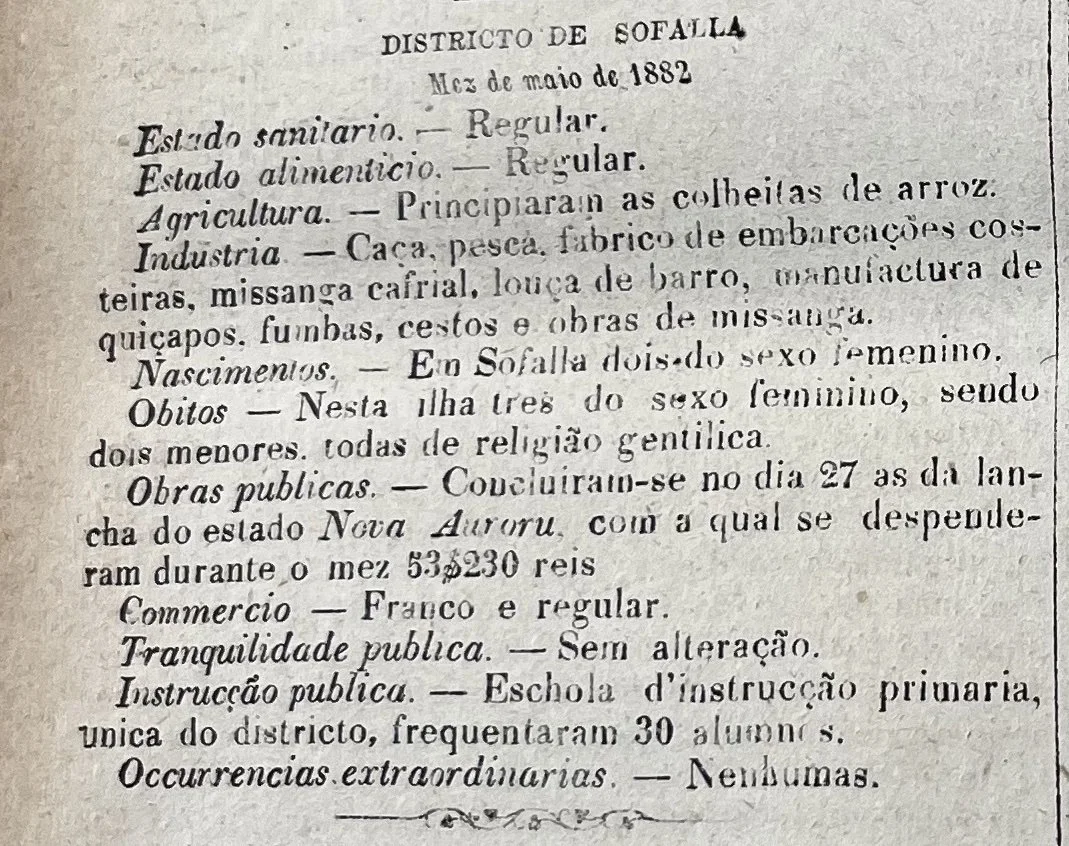
An exerpt from the Boletim Oficial de Moçambique from 1883, showing the monthly status of food and agriculture at Sofala as well as occurrences of extraordinary events.
As we read individual sources, we were searching for direct descriptions of weather and climate, such as daily weather reports and retrospective summaries of seasonal and annual conditions. Observations like ‘the oldest inhabitant of the place never saw two such dry years together’ (written from Chupanga by Robert Thornton, geologist on the Zambezi Expedition, in January 1863; Bodleian Library, MSS Afr s 27), were absolute gold dust. We also looked for indirect evidence of rainfall variability, such as accounts of droughts and floods, river and lake levels, harvest quantity and quality, and the quantities and types of foodstuffs available for European and African populations. Care was needed in interpreting the indirect evidence, since factors other than climate (e.g. conflict, locust infestations) can trigger food shortages with similar manifestations to those caused by drought.
Having analysed all the available sources, we had amassed 5747 individual quotations spanning the period from 1817 to 1900, an average of 68.5 quotations per year. Matt and I then set about creating a series of rainfall indices from this evidence. Over the course of 74 hours of in-person and online meetings, we discussed what each quotation showed and then classified rainfall levels in each quarter and year according to one of five categories – from ‘very wet/floods’ to ‘very dry/drought’. We did this for three sub-regions in Mozambique –North, Central (including the Zambezi River corridor) and South – to create three separate rainfall series.
The results of our collective labour are shown in the figure below. Multi-year droughts were identified from 1824–35, 1857–59, 1861–63, 1871–78, 1884–87 and 1893–98, each exhibiting complex regional expressions in their onset, duration and impacts. Extremely wet rainy seasons were reconstructed in 1818–19, 1839–40, 1854–55, 1860–61, 1865–66, 1870–71, 1872–73 and 1898–99. Statistical analyses revealed a strong coherence between the rainfall series for the central and southern zones, but with less clear patterns in the north. Our results suggest that – as is the case today – years during which Pacific El Niño events occurred were generally associated with drier rainy seasons, but the contemporary pattern whereby La Niña years are normally wetter did not hold.
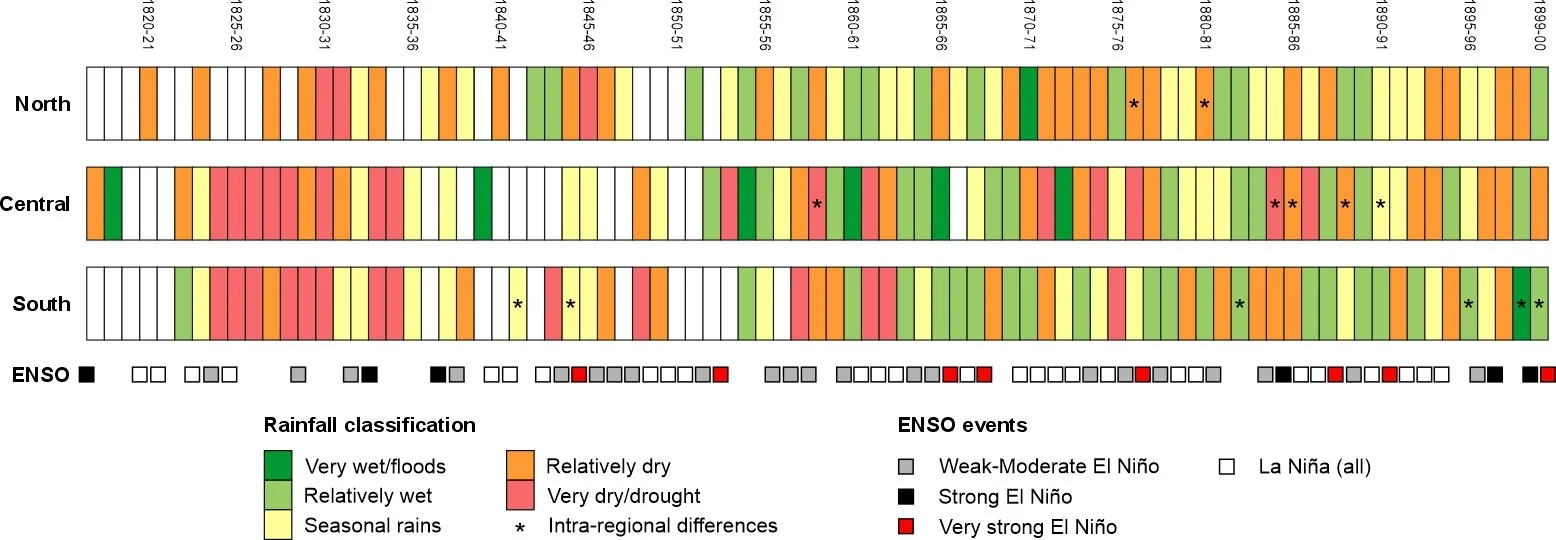
Reconstructed rainfall variability during the rain-years 1817–18 to 1899–1900 for North, Central and South Mozambique (from Nash et al., 2026).
The published paper illustrates the depth of detail we were able to obtain about rainfall variability from historical sources. There are too many memorable quotations to recall here, some extremely harrowing but many others delightfully evocative. In the latter category, one of my favourites was an account in the Beira Times from February 1899 where, following exceptionally heavy rainfall, the current at the mouth of the Pungue River was described as ‘so strong that ships at anchor did not swing to the flood tide’, and many unfortunate crocodiles were washed out to sea.
The results from our study provide a rare, seasonally resolved, baseline for evaluating recent rainfall extremes, testing climate model simulations, and, more generally, understanding climate dynamics in the southwest Indian Ocean region. They also demonstrate the value of incorporating Portuguese-language materials into documentary-based rainfall reconstructions, something that has been distinctly lacking in global historical climatological investigations. Having published our rainfall chronologies, we are now developing papers about tropical cyclones that struck Mozambique during the 19th century. Watch this space.
To read the published paper, see: Nash, D.J., Hannaford, M.J. and Direito, B. (2026) Annual and seasonal rainfall variability in Mozambique during the nineteenth century. International Journal of Climatology https://doi.org/10.1002/joc.70578.
